


Customize
About Item
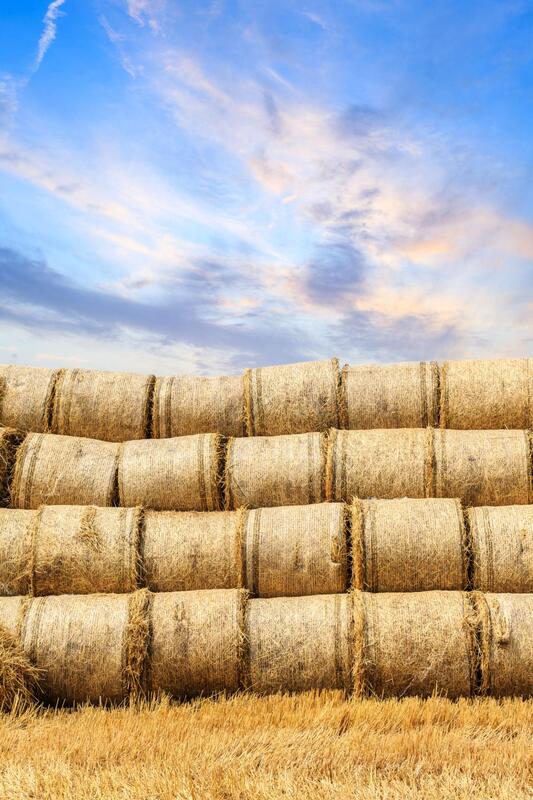
Straw Baling & Packaging Service converts loose crop residues such as paddy straw, wheat straw, and maize stalks into compact, transport-ready bales, enabling efficient storage, transportation, and commercial utilization while reducing open-field burning.
Overview
Loose crop residue occupies significant field space and is difficult to transport or store efficiently. Without structured handling, farmers often burn residues to clear fields quickly for the next crop cycle. Straw Baling & Packaging Service provides a mechanized solution that compresses loose residues into standardized bales, making them easier to manage, store, and monetize.
This service supports farmers, FPOs, biomass processors, dairy operators, and industrial users by transforming agricultural waste into structured biomass products suitable for supply chain integration.
Baling enhances both environmental sustainability and economic value creation.
Mechanized Baling Operations
Modern baling equipment ensures efficiency and uniformity.
Operational capabilities include:
Round baling machines
Square baling machines
Tractor-mounted baler deployment
Field-level baling immediately post-harvest
High-capacity baling for large farm clusters
Multi-crop residue compatibility
Mechanized baling significantly reduces manual labor and time.
Standardized Bale Formation
Uniform bale sizing improves logistics efficiency.
Packaging features include:
Controlled bale density
Moisture-level assessment before baling
Twine or net wrapping for stability
Weather-resistant packaging options
Labeling and batch identification
Stackable and transport-ready bale formats
Standardization simplifies handling and transport.
Efficient Storage & Space Optimization
Compressed bales reduce storage footprint.
Storage benefits include:
Reduced storage area requirement
Improved stacking stability
Easier warehouse management
Reduced spoilage risk
Better ventilation between stacks
Temporary covered storage compatibility
Compact storage improves operational efficiency.
Improved Transportation & Logistics
Loose residue is difficult to move economically.
Transport advantages include:
Higher load capacity per truck
Reduced transportation costs
Faster loading and unloading
Improved weight distribution
Bulk shipment coordination
Compatibility with biomass supply chains
Baling enhances cost-effective logistics.
Multi-Industry Utilization Support
Baled residue serves various industries.
Utilization channels include:
Biomass power plants
Pellet and briquette manufacturers
Paper and pulp industries
Cattle feed producers
Mushroom cultivation units
Bioenergy processing facilities
Structured packaging enables diversified usage.
Environmental Sustainability Impact
Baling reduces dependence on burning.
Environmental benefits include:
Lower air pollution
Reduced greenhouse gas emissions
Improved soil health preservation
Enhanced compliance with anti-burning regulations
Contribution to circular agriculture practices
Sustainable handling strengthens environmental responsibility.
Economic Opportunities for Farmers
Residue can become an additional revenue stream.
Financial benefits include:
Sale of baled straw to biomass buyers
Lower field clearing costs
Reduced penalty risk for burning
Participation in carbon reduction initiatives
Improved farm income diversification
Value-added processing increases profitability.
Strategic Importance in Crop Residue Management
Straw baling plays a crucial role in structured crop residue management systems. By converting loose biomass into standardized units, it bridges the gap between farm-level waste and industrial raw material demand.
Strategic advantages include:
Strengthened biomass supply chains
Enhanced rural employment opportunities
Improved farm sustainability
Increased rural mechanization adoption
Contribution to clean energy initiatives
Ideal Customers
Farmer Producer Organizations (FPOs)
Biomass energy companies
Dairy and livestock operators
Agri cooperatives
Industrial biomass buyers
Agricultural equipment service providers