


Customize
About Item
Sludge Management, Thickening & Dewatering Service provides complete handling, volume reduction, stabilization, and safe disposal or reuse solutions for sludge generated from effluent and sewage treatment plants in agri and industrial facilities.
Overview
Effluent Treatment Plants (ETPs) and Sewage Treatment Plants (STPs) generate sludge as a by-product of physical, chemical, and biological treatment processes. This sludge may contain organic matter, suspended solids, nutrients, chemicals, and microbial residues.
Improper sludge handling can cause secondary pollution, odor issues, and regulatory violations. Sludge Management, Thickening & Dewatering Service ensures safe processing, volume reduction, stabilization, and compliant disposal or beneficial reuse of sludge.
This service supports sustainable wastewater management and environmental protection.
Sludge Characterization & Risk Assessment
Effective management begins with proper analysis.
Assessment includes:
Sludge volume estimation
Moisture content measurement
Nutrient and organic load analysis
Heavy metal screening
Hazard classification
Regulatory compliance review
Accurate characterization guides treatment strategy.
Sludge Thickening Systems
Thickening reduces sludge volume before dewatering.
Thickening methods include:
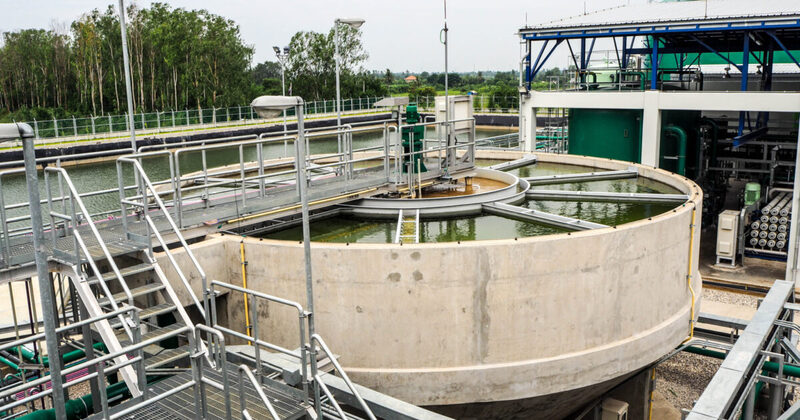
Gravity thickeners
Dissolved air flotation (DAF) units
Mechanical thickening systems
Polymer dosing systems
Sludge holding tanks
Volume reduction improves downstream efficiency.
Sludge Dewatering Technologies
Dewatering significantly reduces moisture content.
Dewatering equipment includes:
Filter press systems
Belt press units
Centrifuge dewatering machines
Screw press systems
Drying beds (for rural setups)
Reduced moisture lowers transport and disposal costs.
Sludge Stabilization & Treatment
Stabilization minimizes odor and pathogens.
Treatment processes include:
Lime stabilization
Anaerobic digestion
Aerobic digestion
Composting integration
Thermal drying
Stabilized sludge is safer for disposal or reuse.
Disposal & Beneficial Reuse Planning
Proper disposal ensures compliance and sustainability.
Reuse options may include:
Compost blending (if non-hazardous)
Soil conditioning (after testing)
Landfill disposal (approved sites)
Co-processing in cement kilns
Nutrient recovery planning
Safe reuse reduces waste burden.
Automation & Monitoring
Efficient sludge systems require oversight.
Monitoring features include:
Moisture content sensors
Polymer dosing control
Sludge flow measurement
Equipment performance tracking
Compliance documentation logs
Monitoring ensures operational reliability.
Environmental & Operational Benefits
Structured sludge management prevents secondary pollution.
Environmental benefits include:
Reduced groundwater contamination risk
Lower odor emissions
Controlled heavy metal disposal
Improved site hygiene
Operational benefits include:
Lower transport costs
Reduced landfill dependency
Improved compliance performance
Enhanced plant efficiency
Strategic Importance in Water Recycling Ecosystem
Sludge management is a critical final stage of wastewater treatment. Without proper thickening and dewatering, treatment systems cannot operate efficiently or sustainably.
Strategic advantages include:
Improved environmental compliance
Reduced operational costs
Enhanced sustainability performance
Long-term waste management stability
Strengthened ESG metrics
Ideal Customers
Agro-processing industries
Dairy plants
Food processing units
Fertilizer and agrochemical plants
Industrial agri enterprises
Municipal and rural wastewater facilities