


Customize
About Item
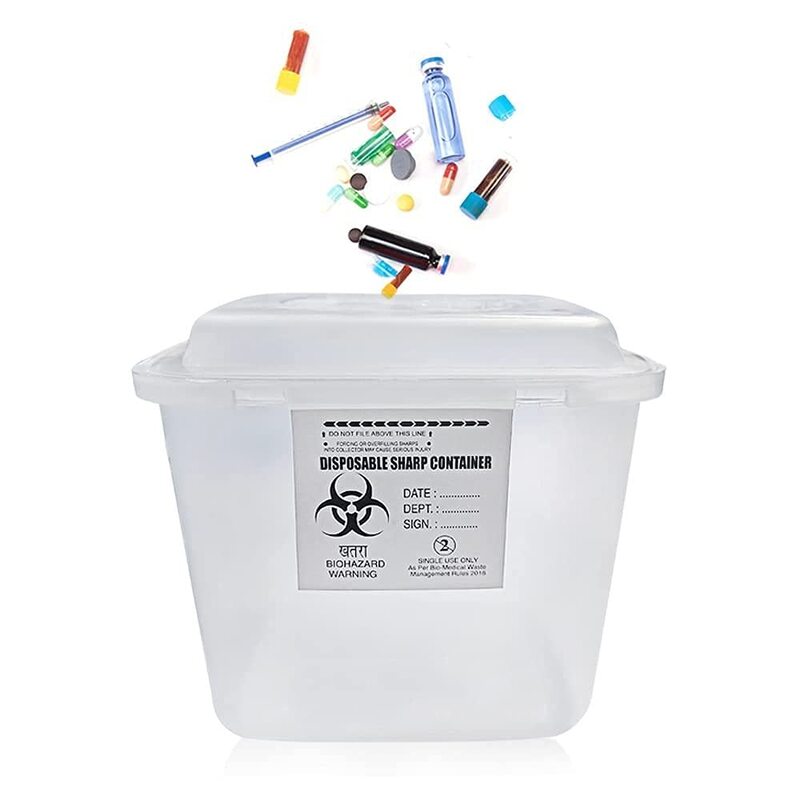
Sharps, Glassware & Lab Plastic Biohazard Disposal Service provides safe collection, sterilization, segregation, and certified disposal of contaminated glassware, sharp instruments, and plastic consumables generated in tissue culture laboratories.
Overview
Tissue culture laboratories use large quantities of glass bottles, culture tubes, scalpels, forceps, needles, plastic containers, pipette tips, and disposable consumables. After use, many of these materials become contaminated with biological agents or chemical residues.
Sharps, Glassware & Lab Plastic Biohazard Disposal Service ensures that all such materials are safely handled, sterilized, segregated, and either recycled (where permissible) or disposed of through certified bio-medical waste channels.
This service reduces injury risk, contamination spread, and environmental impact.
Sharps Waste Management
Sharp instruments pose serious injury risks.
Sharps handling includes:
Use of puncture-proof containers
Needle and blade disposal protocols
Immediate post-use containment
Autoclaving prior to destruction
Certified incineration or shredding
Disposal manifest documentation
Proper sharps management prevents occupational hazards.
Contaminated Glassware Handling
Broken or used glassware requires controlled disposal.
Glass management includes:
Collection in designated rigid containers
Autoclave sterilization cycles
Decontamination before recycling
Safe crushing or disposal
Injury prevention training
Hazard labeling and tracking
Controlled handling reduces accident risk.
Laboratory Plastic Waste Segregation
Plastic culture bottles and tubes are widely used.
Plastic waste support includes:
Segregation of contaminated plastics
Sterilization prior to disposal
Shredding for volume reduction
Recycling channel linkage (if compliant)
Documentation of recycled quantities
Compliance with bio-medical waste rules
Structured recycling reduces environmental burden.
SOP Development & Staff Training
Human safety depends on correct procedures.
Training components include:
Safe disposal protocols
PPE usage training
Injury response procedures
Waste labeling standards
Documentation management
Emergency spill response drills
Training strengthens laboratory biosafety culture.
Regulatory Compliance & Documentation
Sharps and biohazard waste are regulated categories.
Compliance services include:
Bio-medical waste rule alignment
Disposal certificates
Waste tracking logs
Audit preparation support
Inspection coordination
Hazard communication compliance
Documentation ensures regulatory adherence.
Environmental & Occupational Safety Benefits
Safe disposal protects both workers and environment.
Benefits include:
Reduced injury incidents
Lower infection transmission risk
Controlled recycling streams
Improved lab hygiene
Reduced environmental contamination
Proper disposal strengthens sustainability practices.
Strategic Importance in Tissue Culture Waste Management
Sharps, glassware, and plastic waste form a major portion of tissue culture lab waste. Safe handling and disposal are essential to prevent workplace accidents and maintain biosafety standards.
Strategic advantages include:
Improved occupational safety
Reduced compliance risk
Enhanced environmental responsibility
Stronger institutional reputation
Sustainable laboratory operations
Ideal Customers
Plant tissue culture labs
Agri-biotech companies
Micropropagation units
Research institutions
Seed and breeding laboratories
University biotech departments