


Customize
About Item
Residue-to-Bioenergy Feedstock Supply Service ensures structured sourcing, processing, and delivery of agricultural crop residues as standardized feedstock for biomass power plants, bio-CNG facilities, and renewable energy projects.
Overview
Agricultural crop residues represent a significant renewable energy resource. When properly managed, residues such as paddy straw, wheat straw, maize stalks, and cotton stalks can be converted into electricity, bio-CNG, bioethanol, or thermal energy.
However, energy plants require consistent quality, moisture control, density standards, and uninterrupted supply. Residue-to-Bioenergy Feedstock Supply Service bridges the gap between farms and renewable energy facilities by organizing the entire biomass feedstock ecosystem — from collection to final plant delivery.
This service supports clean energy generation while eliminating environmentally harmful residue burning practices.
Feedstock Standardization & Processing
Energy plants require uniform input material.
Processing support includes:
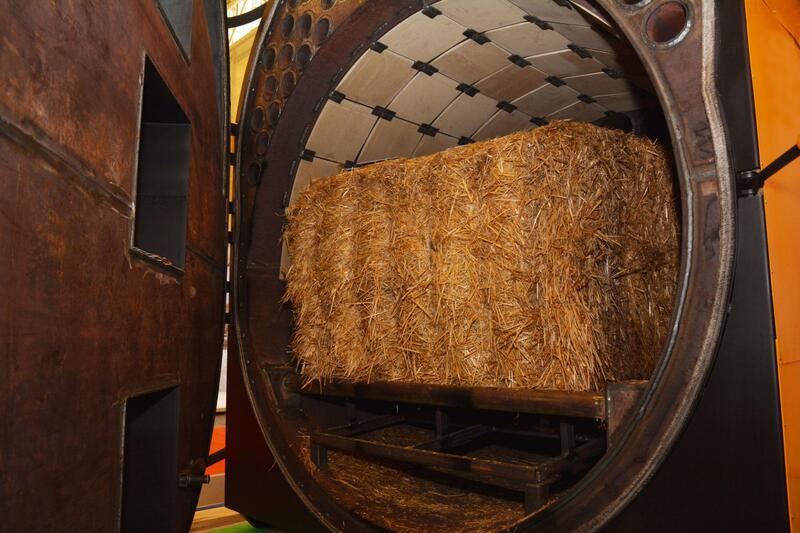
Baling and densification of residues
Moisture content testing and control
Size reduction (if required)
Removal of contaminants and debris
Batch-wise quality documentation
Feedstock grading and classification
Standardized feedstock improves combustion efficiency.
Reliable Sourcing & Volume Assurance
Energy facilities require predictable supply.
Supply capabilities include:
Long-term sourcing contracts with farmer clusters
Seasonal biomass forecasting
Aggregation center coordination
Multi-region sourcing strategies
Buffer stock planning
Emergency supply activation
Stable supply strengthens plant operations.
Logistics & Timely Delivery
Feedstock must arrive on schedule to maintain plant load.
Logistics management includes:
Bulk truck and trailer dispatch
Just-in-time delivery planning
GPS-based tracking systems
Load consolidation strategies
Route optimization
Plant-level unloading coordination
Efficient logistics reduce operational downtime.
Integration with Renewable Energy Projects
The service aligns with multiple bioenergy models.
Supported applications include:
Biomass power plants
Bio-CNG production units
Bioethanol facilities
Industrial boiler fuel supply
Co-firing in thermal power plants
Decentralized rural energy projects
Diverse applications expand biomass value chains.
Environmental & Carbon Impact
Residue-based energy contributes to sustainability.
Environmental benefits include:
Reduced stubble burning
Lower fossil fuel dependency
Reduced greenhouse gas emissions
Renewable energy promotion
Carbon credit participation potential
Clean energy integration improves sustainability performance.
Economic Opportunities for Farmers
Residue-to-energy creates additional income streams.
Financial advantages include:
Sale of crop residues
Reduced disposal costs
Participation in biomass contracts
Diversified farm revenue
Improved rural employment
Energy integration enhances rural economy resilience.
Risk Mitigation & Operational Continuity
Energy plants depend on feedstock stability.
Risk reduction features include:
Multi-source procurement
Contingency stock planning
Seasonal stockpiling
Demand-supply balancing
Weather disruption planning
Structured management ensures plant reliability.
Strategic Importance in Renewable Agriculture
Residue-to-Bioenergy Feedstock Supply plays a vital role in transforming agricultural waste into a renewable energy asset. It supports national clean energy goals while creating circular economy benefits for rural communities.
Strategic advantages include:
Strengthened renewable energy capacity
Reduced environmental pollution
Increased rural industrial integration
Enhanced energy security
Promotion of sustainable agriculture
Ideal Customers
Biomass power plants
Bio-CNG and bioethanol producers
Renewable energy developers
Farmer Producer Organizations (FPOs)
Industrial energy users
Government renewable energy agencies