


Customize
About Item
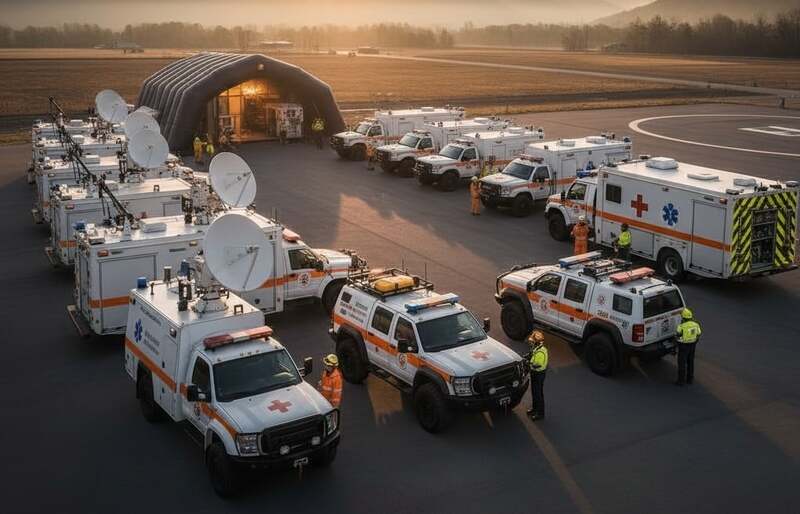
Rapid Response Transportation Service is a mission-critical emergency logistics solution designed to mobilize vehicles, drivers, and routing intelligence within minutes of a disaster event. The service ensures fast, secure, and coordinated movement of relief supplies, medical aid, equipment, and essential commodities to affected regions with maximum efficiency and reliability.
Overview
During disasters such as floods, cyclones, earthquakes, landslides, pandemics, or industrial emergencies, transportation becomes the most vital component of relief operations. Delays in moving essential goods can directly impact survival rates, public safety, and recovery timelines.
The Rapid Response Transportation Service is built around a structured emergency deployment framework that prioritizes speed, coordination, visibility, and safety. It ensures that relief materials move seamlessly from warehouses, ports, cold storage facilities, or manufacturing units to disaster zones — even when infrastructure is partially damaged.
This service integrates fleet readiness, command center coordination, technology-driven tracking, and contingency planning to deliver uninterrupted emergency logistics support.
Emergency Fleet Readiness & Deployment
Preparedness is the foundation of rapid response. Vehicles and personnel are kept in a ready-to-mobilize state.
Deployment capabilities include:
24/7 emergency activation protocol
Dedicated standby vehicles in strategic regions
Multi-capacity fleet (light vans, medium trucks, heavy carriers)
Specialized vehicles for medical, refrigerated, or hazardous cargo
Pre-verified driver network for immediate dispatch
Quick documentation and clearance procedures
Rapid mobilization reduces response time and increases operational effectiveness during critical hours.
Strategic Route Planning & Crisis Navigation
Disasters often result in road closures, damaged bridges, traffic congestion, and restricted access zones. Our service uses intelligent routing and contingency mapping to overcome these challenges.
Routing intelligence features:
Real-time GPS fleet monitoring
Alternate route mapping during blockages
Flood-prone and landslide-risk route identification
Coordination with local authorities for restricted area access
Fuel stop optimization planning
Safe night-movement planning (if required)
Efficient routing ensures faster delivery and minimizes operational risk.
Multi-Modal & Flexible Transport Support
When road transport alone is insufficient, the service supports multimodal logistics coordination.
Multi-modal options include:
Road transport fleet movement
Rail cargo coordination for bulk supplies
Air cargo and helicopter coordination support
Rural and last-mile vehicle deployment
Boat transport coordination during flood conditions
Flexibility ensures uninterrupted supply flow even in complex terrain conditions.
Secure Handling & Cargo Integrity
Relief materials often include medicines, vaccines, food grains, emergency kits, and sensitive equipment. Proper cargo management is essential.
Cargo protection measures:
Structured loading & unloading supervision
Segregation of medical and food supplies
Temperature-controlled movement (if required)
Tamper-proof sealing systems
Shock and vibration control for fragile goods
Real-time proof of delivery documentation
Safe handling protects both material value and human lives.
Technology-Enabled Visibility & Monitoring
Modern emergency logistics requires transparency and accountability.
Technology integration includes:
GPS-enabled live vehicle tracking
Central command dashboard monitoring
Real-time delivery status updates
Digital documentation & e-POD (proof of delivery)
Fleet performance analytics
Data-driven decision support during crisis
Full visibility improves coordination between stakeholders.
Coordination with Relief Agencies & Authorities
Emergency transportation must operate in alignment with government bodies, NGOs, and disaster management teams.
Coordination support includes:
Integration with disaster control rooms
Documentation for relief material movement
Compliance with emergency transport regulations
Real-time communication with field distribution teams
Escalation and contingency management protocols
Collaborative logistics improves response efficiency.
Reduced Downtime & Operational Continuity
Reliable emergency transport ensures continuity of humanitarian operations.
Operational advantages:
Faster response during golden hours
Reduced material shortage in camps
Improved supply chain resilience
Higher delivery success rates
Reduced logistical bottlenecks
Consistency in movement directly strengthens disaster recovery efforts.
Strategic Importance in Disaster Logistics
Rapid Response Transportation forms the backbone of emergency supply chains. Whether it is evacuating food stocks before flooding, delivering relief kits after a cyclone, or transporting medical oxygen during a health crisis, transportation determines how quickly communities recover.
Strategic impact includes:
Accelerated disaster recovery timelines
Enhanced humanitarian support effectiveness
Improved coordination between multiple stakeholders
Reduced economic loss due to supply delays
Strengthened emergency preparedness infrastructure
Ideal Customers
Government disaster management authorities
Humanitarian NGOs
Healthcare logistics providers
Cold chain operators
Large-scale commodity distributors
Infrastructure & relief contractors