


Customize
About Item
Pelletization & Briquetting of Agri Residue Service converts loose crop residues into high-density biomass pellets and briquettes, creating clean-burning, transport-efficient renewable fuel for industrial, commercial, and energy applications.
Overview
Agricultural residues such as paddy straw, wheat straw, cotton stalks, and maize stalks are bulky and difficult to transport or store in loose form. By converting these residues into pellets or briquettes, their energy density increases significantly, making them suitable for industrial fuel and renewable energy applications.
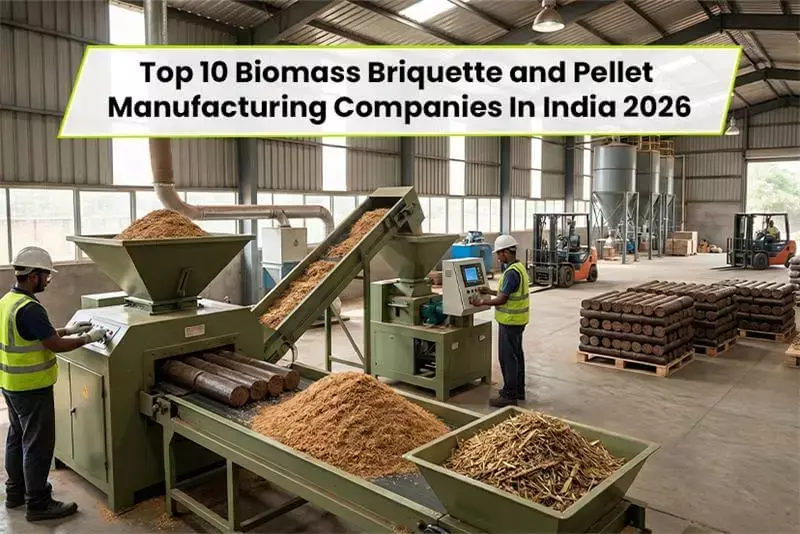
Pelletization & Briquetting Service provides structured processing of crop residues through drying, grinding, compression, and densification technologies. The output is standardized biomass fuel that can replace coal or other fossil fuels in boilers, kilns, and thermal plants.
This service promotes sustainable energy generation while creating economic value from agricultural waste.
Residue Processing & Densification
Efficient conversion requires structured processing steps.
Processing stages include:
Raw material drying
Size reduction through grinding
Removal of impurities
High-pressure compression
Pellet or briquette shaping
Cooling and stabilization
Controlled processing ensures uniform fuel quality.
High-Energy Biomass Fuel Production
Pellets and briquettes offer improved energy efficiency.
Fuel characteristics include:
High calorific value
Uniform density and shape
Low moisture content
Clean combustion properties
Reduced ash content
Easy handling and storage
Standardized fuel improves industrial performance.
Industrial & Commercial Applications
Densified biomass supports multiple industries.
Applications include:
Industrial boilers
Thermal power plants
Brick kilns
Food processing units
Textile and manufacturing units
Rural energy projects
Versatile applications expand biomass demand.
Storage & Transport Efficiency
Pelletization enhances logistics performance.
Logistics benefits include:
Reduced storage space requirement
Easier stacking and handling
Lower transport cost per energy unit
Improved moisture resistance
Reduced risk of spoilage
Bulk packaging options
Densification optimizes supply chain efficiency.
Environmental & Sustainability Impact
Biomass fuel reduces fossil fuel dependency.
Environmental benefits include:
Reduced coal usage
Lower carbon emissions
Elimination of stubble burning
Renewable energy promotion
Improved air quality
Sustainable fuel production supports climate goals.
Farmer & Rural Economic Benefits
Residue-based fuel creates additional income streams.
Economic advantages include:
Revenue from residue sales
Local employment generation
Rural industrial development
Reduced waste disposal costs
Participation in clean energy initiatives
Value-added processing strengthens rural economies.
Quality Control & Compliance
Industrial buyers require consistent standards.
Quality measures include:
Calorific value testing
Moisture content verification
Density and durability assessment
Batch tracking and labeling
Regulatory compliance documentation
Reliable standards build buyer trust.
Strategic Importance in Crop Residue Management
Pelletization & Briquetting convert agricultural waste into a structured renewable energy product. This service bridges the gap between farm-level residue generation and industrial energy demand, creating a sustainable circular economy.
Strategic advantages include:
Strengthened renewable energy ecosystem
Reduced environmental pollution
Increased rural value addition
Improved supply predictability
Contribution to national clean energy targets
Ideal Customers
Biomass energy producers
Industrial boiler operators
Renewable energy companies
Farmer Producer Organizations (FPOs)
Agri cooperatives
Rural biomass entrepreneurs