


Customize
About Item
Mobile Shredding & Mulching Service provides on-field mechanized shredding of crop residues and uniform spreading across farmland, enabling in-situ residue management, soil enrichment, and elimination of stubble burning practices.
Overview
After harvest, large quantities of crop residues remain scattered across fields. Farmers often face tight sowing timelines for the next crop cycle and may resort to burning residues to clear land quickly. Burning, however, causes severe air pollution, destroys soil nutrients, and damages long-term soil fertility.
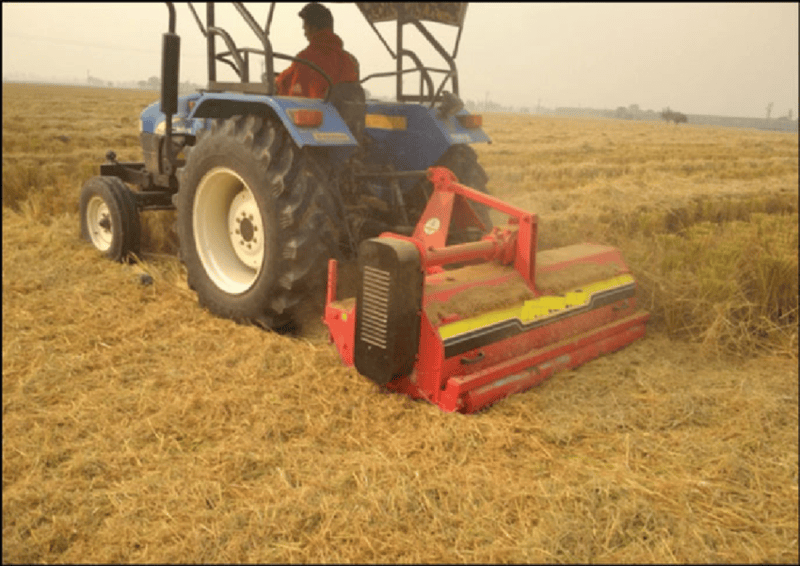
Mobile Shredding & Mulching Service offers an environmentally responsible alternative by deploying tractor-mounted shredders and mulching equipment directly to farms. The machinery cuts, shreds, and evenly spreads crop residues across the field surface, allowing natural decomposition and soil integration.
This service supports sustainable agriculture, improves soil health, and helps farmers comply with anti-burning regulations.
On-Field Shredding Operations
Mechanized shredding ensures quick and uniform residue breakdown.
Operational capabilities include:
Tractor-mounted straw shredders
High-capacity mulching equipment
Multi-acre daily coverage capacity
Paddy, wheat, maize, and cotton residue compatibility
Cluster-based village operations
Time-bound field clearing
On-field processing reduces the need for residue removal.
Uniform Mulching & Soil Coverage
Residue is evenly distributed across the soil surface.
Mulching benefits include:
Even residue spreading
Reduced soil erosion
Moisture retention improvement
Weed suppression
Surface temperature regulation
Enhanced organic matter integration
Uniform coverage improves soil productivity.
Soil Health Enhancement
Shredded residues gradually decompose into organic nutrients.
Soil improvement advantages include:
Increased soil organic carbon
Improved microbial activity
Enhanced nutrient cycling
Better soil structure
Increased water infiltration
Reduced dependency on chemical fertilizers
Residue incorporation supports long-term sustainability.
Reduced Operational Costs for Farmers
Burning may seem quick but has hidden costs.
Economic benefits include:
Lower field clearing expenses
Reduced fertilizer requirement over time
Avoidance of pollution-related penalties
Increased crop yield potential
Sustainable land management
Cost-effective solutions benefit small and large farmers alike.
Compatibility with Conservation Agriculture
Mulching aligns with modern sustainable farming practices.
Sustainable agriculture integration includes:
No-till and minimum tillage compatibility
Support for conservation farming models
Improved climate resilience
Reduced greenhouse gas emissions
Contribution to carbon sequestration efforts
Environmentally responsible practices improve farm reputation.
Scalable & Cluster-Based Implementation
Residue shredding can be scaled efficiently.
Scalability features include:
Custom hiring center integration
Multi-village service scheduling
Peak-season machinery deployment
Farmer group coordination
Seasonal residue management planning
Cluster models increase efficiency and reduce costs.
Environmental & Regulatory Compliance
Governments increasingly regulate stubble burning.
Compliance advantages include:
Reduced air pollution impact
Compliance with anti-burning policies
Improved environmental performance reporting
Support for sustainability certifications
Enhanced corporate social responsibility alignment
Sustainable residue management protects public health.
Strategic Importance in Crop Residue Management
Mobile Shredding & Mulching Service plays a vital role in transforming agricultural waste into a soil-enriching resource. By eliminating burning and promoting in-situ management, it strengthens ecological balance and farm productivity.
Strategic advantages include:
Improved soil fertility
Long-term yield enhancement
Reduced environmental damage
Increased farmer sustainability
Strengthened climate adaptation strategies
Ideal Customers
Farmer Producer Organizations (FPOs)
Agricultural cooperatives
Custom hiring centers
State agriculture departments
Sustainable farming enterprises
Large farm operators