


Customize
About Item
Managed End-to-End Primary & Secondary Logistics Service is a comprehensive agricultural logistics solution that integrates first-mile farm pickup, aggregation, storage transfer, and secondary distribution into a unified managed framework. The service ensures seamless coordination, reduced losses, and optimized supply chain performance.
Overview
Agricultural supply chains are often fragmented, with separate handling of farm-level pickup, aggregation, storage transfer, and market distribution. This disjointed approach leads to inefficiencies, increased costs, and reduced visibility.
The Managed End-to-End Primary & Secondary Logistics Service provides centralized coordination across the entire movement cycle — from farm gate to warehouse, processing unit, or retail distribution. It functions as a structured logistics management framework rather than a standalone transport service.
Integrated First & Second Mile Coordination
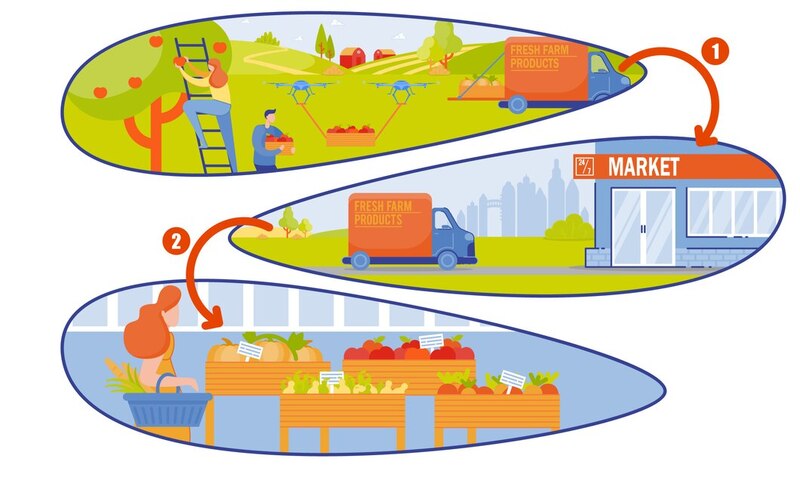
The service begins at farm-level pickup and continues seamlessly into aggregation, storage, and secondary dispatch. All logistics stages are synchronized under one operational system.
Core components include:
Farm gate pickup scheduling
Village cluster aggregation management
Bulk dispatch to warehouses or processing units
Secondary transport to markets or distribution centers
Centralized logistics planning and oversight
This integrated model reduces supply chain fragmentation.
Centralized Logistics Management
A managed framework ensures that transport assets, schedules, and routes are optimized holistically rather than independently at each stage.
Management features include:
Route optimization across primary and secondary legs
Fleet utilization monitoring
Capacity planning based on harvest forecasts
Coordinated dispatch windows
Demand-aligned delivery scheduling
Centralized control improves efficiency across the network.
Cost & Operational Optimization
By managing the entire logistics chain, cost duplication and idle time are minimized. Consolidated planning leads to better financial outcomes.
Operational advantages include:
Reduced overall freight cost
Lower post-harvest losses
Optimized vehicle turnaround time
Improved inventory flow
Reduced storage congestion
End-to-end visibility enhances cost predictability.
Digital Integration & Visibility
Modern managed logistics rely heavily on digital tools for tracking and reporting. This service can integrate multiple systems into a unified dashboard.
Digital capabilities may include:
GPS tracking across all transport legs
Warehouse inventory synchronization
Processing plant intake coordination
Real-time shipment monitoring
ERP and billing system integration
Technology ensures transparency and accountability.
Strategic Importance for Large-Scale Agri Operations
Managed end-to-end logistics are especially valuable for FPOs, exporters, processing companies, and institutional buyers handling high volumes.
Strategic benefits include:
Stronger farm-to-market integration
Improved supply chain resilience
Enhanced export readiness
Support for contract farming models
Scalable national distribution networks
A unified logistics approach transforms agricultural operations from fragmented to streamlined.
Ideal Customers
Large Farmer Producer Organizations (FPOs)
Agricultural exporters
Food processing companies
National commodity traders
Institutional procurement agencies