


Customize
About Item
Farm-Level Waste-to-Biogas Solutions convert agricultural waste, crop residues, and livestock manure into clean biogas for cooking, electricity generation, and heating, while producing nutrient-rich slurry for soil application.
Overview
Agricultural farms generate large volumes of organic waste including cattle dung, crop residues, spoiled produce, and agro-processing waste. When unmanaged, these materials can produce methane emissions and environmental contamination.
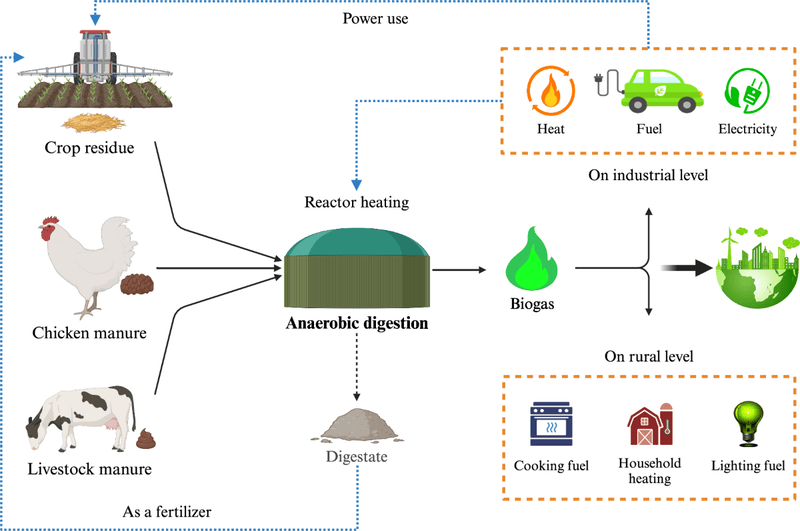
Farm-Level Waste-to-Biogas Solutions establish decentralized anaerobic digestion systems that convert organic waste into biogas and organic slurry. This approach not only generates renewable energy but also closes the nutrient loop by returning processed slurry back to farmland as organic fertilizer.
The service supports sustainable farming, energy independence, and circular resource utilization at the rural level.
Anaerobic Digestion System Setup
Structured plant installation ensures efficient gas generation.
System components include:
Biogas digester tanks
Inlet and slurry mixing systems
Gas storage domes
Piping and distribution systems
Safety valves and monitoring systems
Slurry outlet channels
Proper setup ensures safe and continuous operation.
Feedstock Integration
Multiple organic inputs can be processed.
Supported inputs include:
Cattle and poultry manure
Crop residues
Vegetable and fruit waste
Food processing waste
Agro-industrial by-products
Silage leftovers
Diverse feedstock improves gas yield stability.
Renewable Energy Production
Biogas can serve multiple energy applications.
Energy utilization options include:
Household cooking fuel
Electricity generation via gensets
Heating for dairy and poultry farms
Small-scale industrial use
Bio-CNG upgrading (advanced systems)
Rural microgrid integration
Clean energy reduces fossil fuel dependence.
Nutrient-Rich Slurry Utilization
By-product slurry enhances soil fertility.
Slurry benefits include:
High organic nutrient content
Improved soil microbial activity
Reduced chemical fertilizer need
Better moisture retention
Enhanced crop productivity
Integration with organic farming
Circular nutrient cycling strengthens soil health.
Environmental & Climate Benefits
Biogas systems reduce greenhouse emissions.
Environmental advantages include:
Methane capture from manure
Reduced open waste dumping
Elimination of waste burning
Lower carbon emissions
Improved rural sanitation
Renewable gas production supports climate goals.
Economic & Operational Benefits
Energy self-sufficiency reduces operational costs.
Economic advantages include:
Lower LPG and fuel expenses
Reduced electricity costs
Additional income from surplus gas (where applicable)
Fertilizer cost savings
Improved farm profitability
Energy independence enhances rural resilience.
Scalability & Community Implementation
Biogas solutions can be scaled at different levels.
Scalable models include:
Individual farm-level units
Community biogas plants
Dairy cooperative-based systems
Cluster-based rural installations
Integrated agri-processing waste units
Flexible models encourage widespread adoption.
Strategic Importance in Circular Agriculture
Farm-Level Waste-to-Biogas Solutions represent a complete circular economy model by converting waste into energy and fertilizer. This dual-output system enhances sustainability, reduces pollution, and improves farm economics.
Strategic advantages include:
Strengthened rural energy security
Reduced environmental footprint
Enhanced nutrient recycling
Improved farm sustainability
Promotion of clean energy transition