


Customize
About Item
Crop Residue Pelletization & Briquetting Service converts loose agricultural residues into high-density pellets and briquettes, creating standardized renewable fuel for industrial, commercial, and energy applications within a circular economy framework.
Overview
Loose crop residues such as paddy straw, wheat straw, cotton stalks, and maize stalks are bulky and inefficient to transport or store. By converting them into pellets or briquettes, their density and calorific value increase, making them suitable for clean fuel applications.
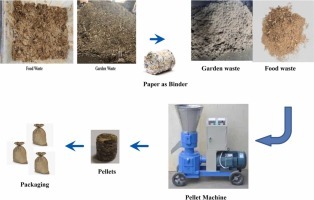
Crop Residue Pelletization & Briquetting Service establishes structured processing systems including drying, grinding, compression, densification, and packaging of biomass residues. This transformation turns agricultural waste into a market-ready renewable energy product.
The service supports circular economy objectives by linking farms with clean energy and industrial fuel markets.
Residue Pre-Processing & Quality Preparation
High-quality fuel requires standardized raw material.
Pre-processing steps include:
Residue collection and sorting
Moisture reduction and drying
Grinding and size reduction
Removal of impurities
Quality inspection
Feedstock grading
Consistent preparation ensures uniform output.
Densification & Fuel Production
Compression technology converts biomass into fuel units.
Production capabilities include:
High-pressure pellet machines
Briquetting press systems
Controlled density formation
Uniform size and shape output
Cooling and stabilization
Bulk packaging solutions
Densified fuel improves combustion performance.
Industrial & Energy Applications
Pellets and briquettes serve multiple sectors.
Usage applications include:
Industrial boilers
Thermal power plants
Food processing units
Textile and manufacturing plants
Brick kilns
Rural energy projects
Renewable biomass fuel reduces fossil fuel dependency.
Storage & Transport Efficiency
Densified biomass improves logistics.
Logistics benefits include:
Reduced storage space
Easy stacking and handling
Lower transport cost per energy unit
Moisture-resistant packaging
Improved load optimization
Bulk shipment coordination
Efficient logistics increase profitability.
Environmental & Sustainability Impact
Residue-based fuel supports green energy transition.
Environmental advantages include:
Elimination of stubble burning
Reduced air pollution
Lower carbon emissions
Renewable fuel substitution
Circular resource utilization
Sustainable fuel production aligns with climate goals.
Economic & Rural Development Benefits
Value addition strengthens rural economies.
Economic advantages include:
Additional farmer revenue streams
Rural job creation
Industrial raw material supply
Reduced waste disposal cost
Long-term supply contracts
Circular fuel production promotes rural industrial growth.
Strategic Importance in Circular Economy
Pelletization & Briquetting transform agricultural waste into structured renewable energy assets, connecting farms with industrial demand while strengthening circular economy systems.
Strategic advantages include:
Strengthened biomass energy markets
Increased farm income diversification
Reduced environmental pollution
Enhanced renewable energy adoption
Sustainable agricultural transformation