


Customize
About Item
Crop Residue Collection & Aggregation Service provides structured field-level collection, bundling, and centralized aggregation of post-harvest crop residues such as paddy straw, wheat straw, maize stalks, and sugarcane trash to prevent open burning and enable value-added utilization.
Overview
After harvest, large quantities of crop residues remain in agricultural fields. Without proper management systems, farmers often resort to open-field burning to clear land quickly for the next sowing cycle. This practice leads to air pollution, soil degradation, nutrient loss, and environmental damage.
Crop Residue Collection & Aggregation Service offers an organized alternative by systematically collecting and consolidating agricultural residues from farm fields and transporting them to aggregation centers for further processing or commercial use.
The service supports farmers, FPOs, biomass processors, and agri enterprises in converting waste into economic opportunity while promoting sustainable agriculture practices.
Field-Level Collection Operations
Efficient residue management begins at the farm level.
Collection capabilities include:
Tractor-mounted residue collection systems
Manual and semi-mechanized collection support
Multi-acre cluster collection planning
Segregation of usable and non-usable residue
Scheduled collection immediately after harvest
Coordination with farmer groups
Timely collection prevents residue burning and soil damage.
Aggregation & Centralized Storage
Collected residue must be consolidated efficiently.
Aggregation support includes:
Village-level aggregation centers
Weighbridge and quantity documentation
Moisture content assessment
Segregated stacking for different residue types
Temporary covered storage solutions
Batch tagging and inventory tracking
Centralized aggregation improves supply chain efficiency.
Support for Multiple Crop Residues
Different crops produce different types of residues.
Residues managed include:
Paddy straw
Wheat straw
Maize stalks
Sugarcane trash
Cotton stalks
Mustard and pulse residues
Crop-specific handling ensures quality preservation.
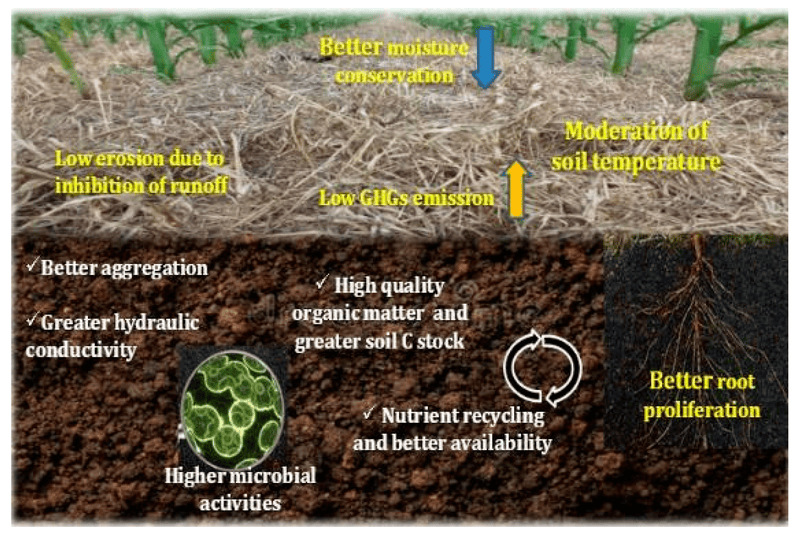
Environmental & Soil Protection Benefits
Proper residue management supports sustainability.
Environmental advantages include:
Reduced air pollution
Lower greenhouse gas emissions
Prevention of soil nutrient loss
Reduced fire hazards
Improved soil organic matter retention
Sustainable practices enhance long-term soil productivity.
Value Chain Integration
Residue can become a valuable raw material.
Downstream linkage support includes:
Biomass energy plants
Pellet and briquette manufacturers
Composting units
Cattle feed processors
Biochar production facilities
Paper and packaging industries
Aggregation enables commercial utilization.
Economic Opportunities for Farmers
Residue can generate additional income.
Financial benefits include:
Revenue from residue sales
Reduced land clearing costs
Avoidance of burning penalties
Participation in sustainability programs
Improved farm productivity
Monetizing residue improves rural income stability.
Operational Efficiency & Scalability
The service is designed for large-scale implementation.
Scalability features include:
Cluster-based farmer coordination
Seasonal operation planning
Equipment pooling systems
Integration with agri logistics networks
Data-based collection reporting
Structured systems ensure long-term viability.
Strategic Importance in Sustainable Agriculture
Crop residue management plays a critical role in climate resilience and environmental protection. Organized collection and aggregation reduce harmful burning practices and create circular economy opportunities within agriculture.
Strategic advantages include:
Improved rural air quality
Strengthened biomass supply chains
Enhanced farmer compliance with regulations
Contribution to carbon reduction initiatives
Promotion of sustainable farming ecosystems
Ideal Customers
Farmer Producer Organizations (FPOs)
Agricultural cooperatives
Biomass energy companies
Agri processing industries
State agriculture departments
Sustainability-focused agribusinesses