


Customize
About Item
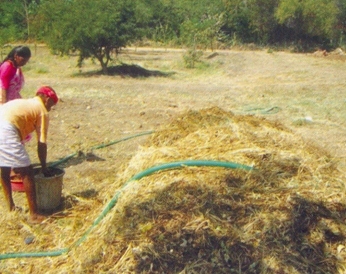
Composting & Organic Manure Processing Service converts crop residues into nutrient-rich organic compost through structured decomposition processes, improving soil fertility, reducing chemical fertilizer dependency, and promoting sustainable agriculture practices.
Overview
Large volumes of crop residues are often treated as waste after harvest. However, these residues contain valuable organic matter and nutrients that can be recycled back into the soil through composting. Composting transforms agricultural by-products into stable organic manure, enhancing soil health and reducing environmental impact.
Composting & Organic Manure Processing Service provides systematic collection, shredding, microbial treatment, controlled decomposition, and packaging of crop residues into market-ready compost.
This service supports farmers, FPOs, organic farming enterprises, and agri cooperatives in building a circular nutrient economy.
Structured Composting Process
Effective composting requires controlled biological decomposition.
Processing stages include:
Residue shredding and size reduction
Moisture level adjustment
Microbial culture application
Windrow or pit composting setup
Periodic turning and aeration
Temperature monitoring
Final curing and stabilization
Scientific composting ensures nutrient-rich output.
Conversion of Multiple Crop Residues
Various residues can be composted efficiently.
Supported materials include:
Paddy straw
Wheat straw
Maize stalks
Cotton stalks
Vegetable waste
Agro-processing by-products
Diverse feedstock increases scalability.
Soil Health & Nutrient Enhancement
Compost improves soil structure and fertility.
Soil benefits include:
Increased organic carbon content
Improved soil microbial activity
Enhanced nutrient availability
Better soil aggregation
Improved water retention
Reduced soil erosion
Healthy soils promote higher yield stability.
Reduction in Chemical Fertilizer Dependency
Organic manure supplements synthetic inputs.
Economic advantages include:
Lower fertilizer expenses
Improved nutrient efficiency
Balanced soil nutrition
Long-term soil productivity
Reduced environmental contamination
Organic inputs strengthen sustainable farming systems.
Environmental & Climate Benefits
Residue composting prevents harmful burning.
Environmental advantages include:
Reduced air pollution
Lower greenhouse gas emissions
Decreased landfill waste
Promotion of circular agriculture
Contribution to climate mitigation goals
Sustainable residue use improves environmental performance.
Packaging & Market Integration
Processed compost can be commercialized.
Market integration support includes:
Bulk compost supply
Bagged organic manure packaging
Branding support for FPOs
Distribution to retail agri markets
Organic certification coordination
Farmer-to-farmer supply networks
Compost commercialization generates additional income.
Scalability & Cluster-Based Implementation
The service can operate at different scales.
Scalability features include:
Village-level composting units
FPO-managed compost centers
Centralized processing facilities
Seasonal residue conversion planning
Mechanized compost turning support
Scalable systems increase adoption.
Strategic Importance in Crop Residue Management
Composting transforms agricultural waste into a valuable soil amendment, strengthening farm sustainability while reducing environmental damage from residue burning.
Strategic advantages include:
Improved soil fertility
Enhanced long-term crop productivity
Reduced environmental pollution
Strengthened organic agriculture movement
Increased rural value addition
Ideal Customers
Farmer Producer Organizations (FPOs)
Organic farming enterprises
Agricultural cooperatives
Rural composting units
State agriculture departments
Sustainable agri startups