


Customize
About Item
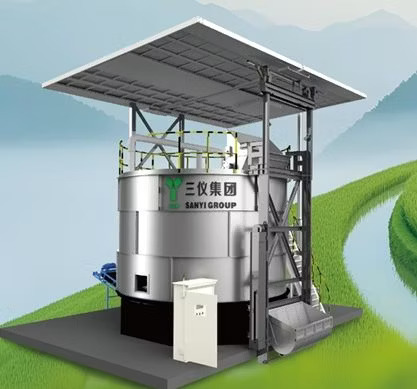
Compost Turnkey Plant Development Service provides complete planning, engineering, construction, machinery installation, and operational commissioning of commercial-scale compost production plants for agri enterprises, FPOs, and waste management companies.
Overview
As demand for organic manure and sustainable soil inputs increases, large-scale compost production facilities are becoming essential. Commercial compost plants enable structured processing of high volumes of agricultural organic waste into standardized, market-ready compost products.
Compost Turnkey Plant Development Service offers end-to-end project execution — from feasibility studies and plant design to machinery installation, automation integration, and operational handover. The service ensures technical efficiency, environmental compliance, and commercial viability.
This solution supports organized organic waste management and commercial fertilizer production at scale.
Feasibility Study & Project Planning
Successful plant development begins with detailed planning.
Planning support includes:
Waste availability assessment
Market demand analysis
Financial viability modeling
Site selection and land planning
Environmental impact review
Capacity planning and ROI estimation
Comprehensive feasibility ensures sustainable investment.
Engineering Design & Infrastructure Development
Professional engineering enhances plant performance.
Infrastructure components include:
Composting pads or enclosed units
Windrow or in-vessel systems
Shredding and mixing equipment
Leachate collection systems
Odor control mechanisms
Stormwater management systems
Finished product storage facilities
Robust infrastructure ensures operational efficiency.
Machinery Procurement & Installation
Modern equipment accelerates compost production.
Equipment support includes:
Waste shredders
Windrow turners
Trommel screens
Conveyor systems
Bagging and packaging machines
Quality testing equipment
Advanced machinery improves output consistency.
Process Optimization & Automation
Automation improves efficiency and quality control.
Operational systems include:
Automated aeration systems
Temperature and moisture sensors
Digital monitoring dashboards
Production tracking software
Inventory management systems
Batch documentation tools
Automation enhances reliability and scalability.
Compliance & Environmental Management
Commercial plants must meet regulatory standards.
Compliance support includes:
Pollution control approvals
Environmental clearance documentation
Waste handling compliance
Safety standards implementation
Odor and emission management
Quality certification readiness
Compliance ensures smooth plant operations.
Branding, Packaging & Market Linkage
Commercial success requires strong market positioning.
Market integration includes:
Compost branding strategy
Packaging design support
Distribution channel development
Retail and bulk sales coordination
Organic certification facilitation
Institutional buyer linkage
Structured marketing improves profitability.
Economic & Operational Benefits
Turnkey plants generate scalable revenue.
Business advantages include:
High-volume compost production
Revenue from waste processing
Employment generation
Reduced landfill dependency
Strong return on investment
Long-term market positioning
Commercial-scale production strengthens rural industrial growth.
Strategic Importance in Organic Waste Management
Compost Turnkey Plant Development enables systematic transformation of agricultural organic waste into commercially valuable products. It supports circular economy goals, improves soil health, and strengthens rural enterprise ecosystems.
Strategic advantages include:
Scalable waste-to-value conversion
Improved soil fertility supply chain
Enhanced sustainability branding
Increased rural employment
Strengthened circular agriculture model
Ideal Customers
Large agri enterprises
Farmer Producer Organizations (FPOs)
Waste management companies
Dairy cooperatives
Agro-processing industries
Municipal rural development bodies