


Customize
About Item
Agricultural Runoff & Drainage Water Treatment Solutions provide customized systems to treat nutrient-rich runoff, irrigation return flows, and farm drainage water to prevent pollution, recover nutrients, and enable safe reuse for agricultural purposes.
Overview
Agricultural activities generate runoff water during irrigation, rainfall events, and field drainage. This runoff often carries excess fertilizers (nitrogen, phosphorus), pesticides, suspended soil particles, and organic matter into nearby water bodies, contributing to eutrophication and groundwater contamination.
Agricultural Runoff & Drainage Water Treatment Solutions are designed to capture, treat, and recycle farm runoff water before discharge or reuse. These systems combine natural and engineered treatment methods to reduce pollutant load while preserving water resources.
The solution strengthens sustainable farming practices and supports compliance with environmental regulations.
Runoff Assessment & Water Quality Analysis
Understanding runoff characteristics is essential.
Assessment includes:
Nutrient concentration analysis (N, P, K)
Pesticide residue testing
Sediment load measurement
Seasonal runoff volume estimation
Drainage pattern mapping
Regulatory compliance review
Proper analysis ensures effective treatment design.
Physical & Sedimentation Treatment
Initial treatment removes solids.
Primary treatment components include:
Sedimentation ponds
Check dams
Silt traps
Screening chambers
Flow control structures
Drainage channel stabilization
Physical removal reduces suspended solids.
Biological & Natural Treatment Systems
Eco-based solutions improve sustainability.
Treatment methods include:
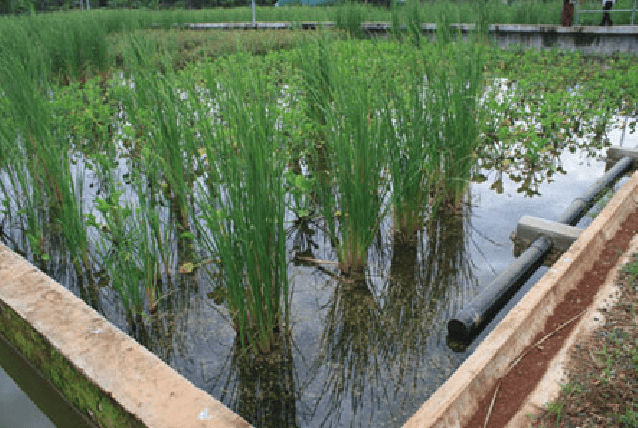
Constructed wetlands
Bio-retention basins
Vegetative filter strips
Phytoremediation systems
Aerated lagoons
Microbial bioremediation units
Natural systems enhance nutrient reduction.
Nutrient Recovery & Water Reuse
Runoff water can be converted into a resource.
Reuse applications include:
Irrigation reuse
Fertigation integration
Farm pond storage
Landscape watering
Livestock water (after treatment)
Nutrient recovery reduces fertilizer dependency.
Integration with Farm Water Management Systems
Treatment solutions can align with irrigation infrastructure.
Integration includes:
Drip irrigation linkage
Rainwater harvesting systems
Farm pond connectivity
Groundwater recharge planning
Automated water distribution controls
Integrated systems enhance water efficiency.
Monitoring & Compliance Support
Ongoing monitoring ensures performance.
Monitoring features include:
Periodic nutrient testing
Water clarity measurement
Pesticide residue tracking
Flow rate monitoring
Environmental reporting documentation
Compliance reduces legal and ecological risks.
Environmental & Agronomic Benefits
Runoff treatment supports ecosystem protection.
Environmental benefits include:
Reduced nutrient leaching
Lower risk of water body eutrophication
Improved groundwater quality
Reduced soil erosion
Agronomic benefits include:
Water reuse savings
Nutrient recycling
Improved soil moisture management
Sustainable farm practices
Strategic Importance in Sustainable Agriculture
Agricultural Runoff & Drainage Water Treatment is essential in regions facing water scarcity and strict environmental regulations. By treating runoff at source, farms adopt circular water and nutrient management systems that protect ecosystems while improving productivity.
Strategic advantages include:
Enhanced water sustainability
Reduced environmental liability
Improved farm efficiency
Strengthened ESG positioning
Long-term ecological balance
Ideal Customers
Large-scale farms
Irrigation-dependent agricultural estates
Agro-processing clusters
Farmer Producer Organizations (FPOs)
Organic farming enterprises
Rural watershed management projects