

Customize
About Item
Agri By-Product Upcycling Service transforms agricultural processing by-products such as rice husk, wheat bran, and sugarcane bagasse into value-added products for energy, feed, packaging, and industrial applications, supporting circular economy and waste-to-value initiatives.
Overview
Agricultural processing activities generate significant quantities of by-products including rice husk from mills, wheat bran from flour processing, sugarcane bagasse from sugar factories, and oilseed cakes from extraction units. Traditionally, some of these by-products are underutilized or inefficiently disposed of.
Agri By-Product Upcycling Service creates structured systems for converting these secondary outputs into high-value commercial products. Through processing, refinement, and industrial integration, agricultural by-products become resources for energy, animal nutrition, bio-based materials, and manufacturing industries.
This service strengthens circular economy adoption by ensuring that no agricultural output goes to waste.
Rice Husk & Agro-Husk Utilization
Rice husk is a high-volume agricultural by-product.
Upcycling applications include:
Biomass fuel for boilers
Rice husk ash production
Silica extraction
Pelletization and briquetting
Biochar conversion
Insulation material manufacturing
Structured utilization increases industrial demand.
Wheat Bran & Oilseed Cake Value Addition
Bran and oilseed residues have high nutritional value.
Processing uses include:
Cattle and poultry feed
Nutritional supplements
Fortified feed production
Organic soil amendment
Feed export supply chains
Livestock nutrition programs
Value addition improves rural income streams.
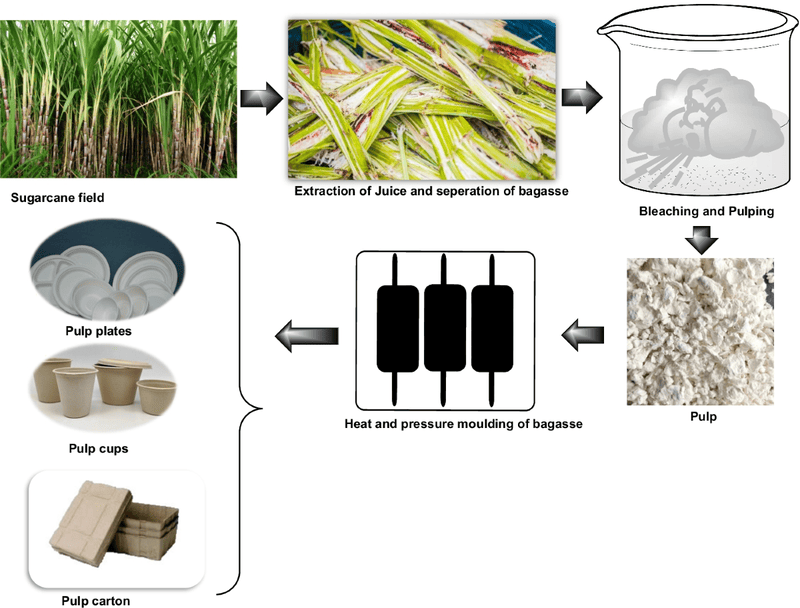
Sugarcane Bagasse Processing
Bagasse is a major by-product in sugar industries.
Upcycling solutions include:
Biomass power generation
Paper and pulp manufacturing
Biodegradable packaging production
Particle board manufacturing
Bioethanol feedstock
Compost and soil amendment
Diversified usage strengthens industrial circularity.
Industrial Integration & Supply Chain Linkage
By-products must align with market demand.
Integration support includes:
Buyer identification and contract facilitation
Bulk logistics coordination
Quality grading and certification
Moisture control and storage planning
Long-term supply agreements
Export market linkage
Market connectivity increases profitability.
Environmental & Sustainability Benefits
Upcycling reduces environmental burden.
Environmental advantages include:
Reduced waste disposal
Lower landfill dependency
Reduced air pollution
Improved resource efficiency
Circular resource utilization
Sustainable use improves environmental compliance.
Economic & Rural Development Impact
By-product utilization creates new economic layers.
Economic advantages include:
Additional revenue from processing waste
Rural employment generation
Strengthened agri-processing industries
Reduced production waste costs
Increased farmer and miller profitability
Value chain expansion improves rural prosperity.
Strategic Importance in Circular Agriculture
Agri By-Product Upcycling ensures that agricultural processing outputs are reintegrated into productive economic streams. It supports industrial sustainability, reduces environmental impact, and promotes efficient resource utilization.
Strategic advantages include:
Enhanced resource efficiency
Strengthened agri-industrial integration
Improved waste-to-value transformation
Reduced environmental footprint
Increased circular economy adoption